Earth Science

How do volcanic islands rise from the middle of the ocean?

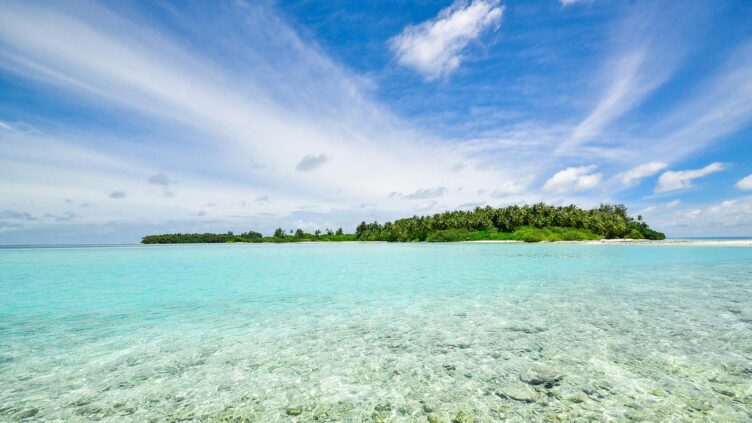
IntroductionVolcanic islands can appear to sprout from the middle of the ocean as if by magic. In reality, their formati...
Statistics & Probability

The difference between association and causation in everyday data

IntroductionEveryday data—from weather charts and social media trends to health statistics and sales reports—can show pa...
Statistics & Probability

How placebo effects can complicate otherwise simple comparisons

IntroductionThe placebo effect occurs when a person experiences a real change in symptoms or perception after receiving ...
Earth Science

Why are some rocks billions of years old while others formed yesterday?

IntroductionRocks on Earth range from billions of years old to brand-new fragments formed yesterday. The difference depe...
Plants & Fungi

How fungi turn dead wood back into living soil

IntroductionWhen a tree falls in the forest, it does not simply vanish. Fungi — a diverse group of organisms that includ...
Astronomy & Space

The icy moon that may hide an ocean beneath its surface

IntroductionAmong the many icy worlds in our solar system, one moon stands out because scientists believe it may hide a ...
Chemistry

What Makes Some Substances Smell Stronger Than Others?

IntroductionScent plays a powerful role in how we experience the world. Some substances produce faint, barely noticeable...
Environment & Ecology

Why Old-Growth Forests Are So Different From Younger Forests

IntroductionOld-growth forests—sometimes called primary or ancient forests—look and behave very differently from younger...
Weather & Climate

How sleet forms in the narrow layer between rain and snow

IntroductionSleet forms in a narrow temperature layer when falling snow partially melts and then refreezes into small ic...
Plants & Fungi

Why some plants can live almost entirely on air

IntroductionSome plants appear to live almost entirely on air — no soil, little water, and sometimes only exposure to hu...
Statistics & Probability

What a confidence interval really tells you about an estimate

IntroductionA confidence interval gives a range of plausible values for a population quantity—like a mean or proportion—...
Physics

Why does ice feel colder than metal at the same temperature?

IntroductionHave you ever touched an ice cube and felt it bite into your skin, while a metal doorknob at the same temper...
Chemistry

How Molecules Create the Colors We See

IntroductionColor is a familiar part of daily life, from the blue of the sky to the red of an apple. But at its core, co...
Earth Science

Why are there so many volcanoes around the Pacific Ocean?

IntroductionThe Pacific Ocean is ringed by hundreds of volcanoes, from deep-sea vents to towering island peaks. This hig...
Astronomy & Space

Why looking farther into space also means looking further into the past

IntroductionWhen astronomers say that looking farther into space is like looking back in time, they mean that light take...
Biology

The remarkable ways your body repairs itself

IntroductionThe human body continually repairs and maintains itself through a range of coordinated biological processes....
Chemistry

Why Does Superglue Harden So Quickly?

IntroductionSuperglue, a household staple for quick fixes, seems to harden almost instantly. That rapid setting surprise...
Earth Science

How can fossils reveal the environment where an ancient animal lived?

IntroductionFossils are more than old bones or impressions in rock. They are clues left behind that help scientists reco...
Weather & Climate

What makes a cloud suddenly begin producing rain?

IntroductionClouds begin producing rain when tiny water droplets or ice crystals inside them grow large enough to fall t...
Physics

What makes some sounds travel farther than others?

IntroductionWhy do some sounds carry for miles while others fade within a few feet? The distance sound travels depends o...
Astronomy & Space

What actually happens when a star runs out of fuel?

IntroductionStars shine because they turn mass into energy through nuclear fusion. When a star "runs out of fuel," that ...
Earth Science

How do scientists know what lies deep inside Earth?

IntroductionWe cannot dig to Earth’s center, so scientists use indirect clues to learn what lies beneath our feet. By co...
Biology

Why do we need to blink?

IntroductionBlinking is a simple, automatic action we do many times each minute. It keeps our eyes comfortable and healt...
Statistics & Probability

How natural experiments can reveal cause and effect without a laboratory

IntroductionNatural experiments are real-world situations where an outside event or policy creates differences between g...
Mathematics

The simple mathematics behind every clock face

IntroductionEvery traditional clock face — the familiar circle with numbers and hands — hides simple, elegant mathematic...
Weather & Climate

Why does wind whistle around windows, wires, and buildings?

IntroductionWhen wind moves past windows, wires, or building edges it often produces a thin, musical sound commonly call...
Chemistry

Why Do Some Materials Dissolve While Others Do Not?

IntroductionWhy do some materials dissolve while others do not? Dissolving depends on how a material's particles interac...
Chemistry

The Chemistry Behind Why Soap Cleans So Well

IntroductionWhy does soap remove dirt, grease, and germs so effectively? The answer lies in chemistry: soap molecules ha...
Earth Science

What gives rocks their different colors?

IntroductionRocks come in a dazzling range of colors — from the deep black of basalt to the green of olivine-rich perido...
Plants & Fungi

Why tree bark looks so different from species to species

IntroductionTrees wear their bark like outer clothing, but that “clothing” varies dramatically from species to species. ...
Statistics & Probability

How response rates affect what a survey can really tell you

IntroductionResponse rate—the share of people who complete a survey out of those invited—often determines how much confi...
Mathematics

Why triangles are so important in mathematics

IntroductionTriangles are one of the simplest and most powerful shapes in mathematics. They appear everywhere from schoo...
Weather & Climate

Why warm Chinook-like winds can make temperatures jump so quickly

IntroductionWarm, Chinook-like winds can make temperatures rise rapidly over a few hours, sometimes melting snow and tur...
Animals

The remarkable ways animals survive extreme cold

IntroductionMany animals live where winter temperatures plunge far below freezing. They survive through a mix of physica...
Mathematics

Why powers of two appear everywhere in mathematics

IntroductionPowers of two — numbers like 1, 2, 4, 8, 16, 32 and so on — show up in many corners of mathematics, computer...
Biology

Why do humans have two lungs but only one heart?

IntroductionHumans have two lungs but only one heart. That simple anatomical fact raises questions about how our bodies ...
Astronomy & Space

How a planet can have seasons without being much like Earth

IntroductionSeasons are changes in climate and daylight that repeat over a planet's year. Earth’s seasons are familiar: ...
Biology

Why does your skin wrinkle in water?

IntroductionHave you ever noticed your fingers and toes get pruney after a long soak? That familiar wrinkling is more th...
Chemistry

Why Does Lemon Juice Keep Some Foods From Turning Brown?

IntroductionLemon juice is a common kitchen remedy to stop fruits and some vegetables from turning brown. The reason it ...
Weather & Climate

What makes desert temperatures fall so sharply after dark?

IntroductionDesert nights are famous for being cold. While daytime in deserts can be blisteringly hot, temperatures ofte...