Introduction
On some clear mornings or after hot weather, distant mountain ranges can look startlingly sharp and close, even though they are many miles away. This visual oddity is not a trick of the eye alone but a predictable atmospheric effect. In plain terms, the air itself is changing how light travels and how your brain interprets distance and contrast.
- What causes distant mountains to look unusually clear?
- How the atmosphere normally makes mountains look hazy
- When and why distant mountains look unusually clear
- How refraction changes the apparent clarity and position
- Concrete examples and everyday observations
- How color and contrast change
- How your brain interprets distance and why clarity can seem deceptive
- Practical implications and applications
- When the effect can be misleading or surprising
- How to tell when clarity is due to atmospheric conditions
- Simple experiments to observe the effect
- Summary of the main mechanism
- Conclusion
What causes distant mountains to look unusually clear?
The main reason distant mountains sometimes appear unusually clear is a combination of atmospheric refraction and changes in scattering that increase contrast and reduce the usual haze between an observer and the distant peaks. When air layers near the surface are unusually stable or have different temperatures, light rays bend and the usual softening caused by airborne particles and moisture is reduced. The result is sharper outlines, brighter colors, and an impression that the mountains are closer than they really are.
Key terms explained
Refraction — the bending of light as it passes through air layers of different temperature or density.
Scattering — the process by which particles and molecules in the air redirect sunlight, usually causing distant objects to look blueish and less distinct.
Haze — the visual effect of many tiny particles (dust, pollution, water droplets) in the atmosphere that reduce contrast and blur distant objects.
Temperature inversion — a situation where a layer of warmer air sits above cooler air near the ground, reversing the usual temperature pattern in the lower atmosphere.
How the atmosphere normally makes mountains look hazy
Under typical conditions, sunlight reflects off distant mountains and travels through tens or hundreds of kilometers of air before reaching your eyes. Along that path, molecules (Rayleigh scattering) and larger particles (Mie scattering) scatter some of the light. Blue wavelengths are scattered more, which is why distant mountains and far-off landscapes often take on a bluish, soft appearance. Haze from moisture, dust, smoke, or pollution further reduces contrast and detail.
When and why distant mountains look unusually clear
Several atmospheric situations can reduce haze and make remote mountains appear very sharp:
Temperature inversions — A temperature inversion can trap a thin layer of humid or polluted air close to the surface while the air above is warmer and drier. If you are above the trapped layer or viewing across sections where the inversion reduces turbulence, the mid- and upper-level air can be much clearer, allowing light to travel with less scattering and producing crisper views.
Very low humidity — Dry air contains fewer water droplets to scatter light. After a dry front passes or during cold, dry weather, the reduction in water vapor makes distant features appear higher in contrast.
Stable, laminar air layers — On calm mornings or nights, the air can become layered and smooth (laminar), with less mixing. Smooth layers reduce the random deflection of light and limit the spread of haze, preserving higher contrast in long-distance views.
Reduced particulate matter — After rain, snow, or strong winds that clear dust and pollution, the atmosphere temporarily has fewer particles. Cleaner air scatters less light, so distant mountains look more vivid and detailed.
How refraction changes the apparent clarity and position
Refraction is a key part of the explanation. Light bends when it passes between layers of air with different temperatures and densities. When the temperature gradient is strong and layered, light rays from a distant mountain can be bent toward the observer. That bending can do two things relevant to clarity:
Increase apparent brightness and contrast — When rays are bent so more light reaches the observer than in the normal straight-line path, the distant object can appear brighter and more contrasty against the sky or foreground.
Shift apparent position — Refraction can lift or lower the apparent position of a distant peak. Depending on conditions, mountains may look slightly higher or lower than their true geometric position, sometimes producing mirage-like effects where outlines are distorted or duplicated.
Types of mirages related to distant clarity
Superior mirage — Occurs when a warmer air layer sits above cooler air, bending light downward so objects beyond the horizon or hidden by curvature can become visible or appear elevated. Superior mirages often make distant coastlines or mountains seem unusually clear or oddly placed.
Fata Morgana — A complex, rapidly changing set of superior mirage distortions caused by strong inversions and multiple layered refractions. Though often associated with ships at sea, a Fata Morgana can also affect mountain silhouettes, stretching or stacking them into exaggerated shapes.
Concrete examples and everyday observations
Alpine observers — Hikers and photographers in mountainous regions often notice crisper views in the early morning after a cool night when the valley settles and pollutants are trapped below a clear layer. Peaks on the opposite side of a wide valley or plain can appear almost photographic in definition.
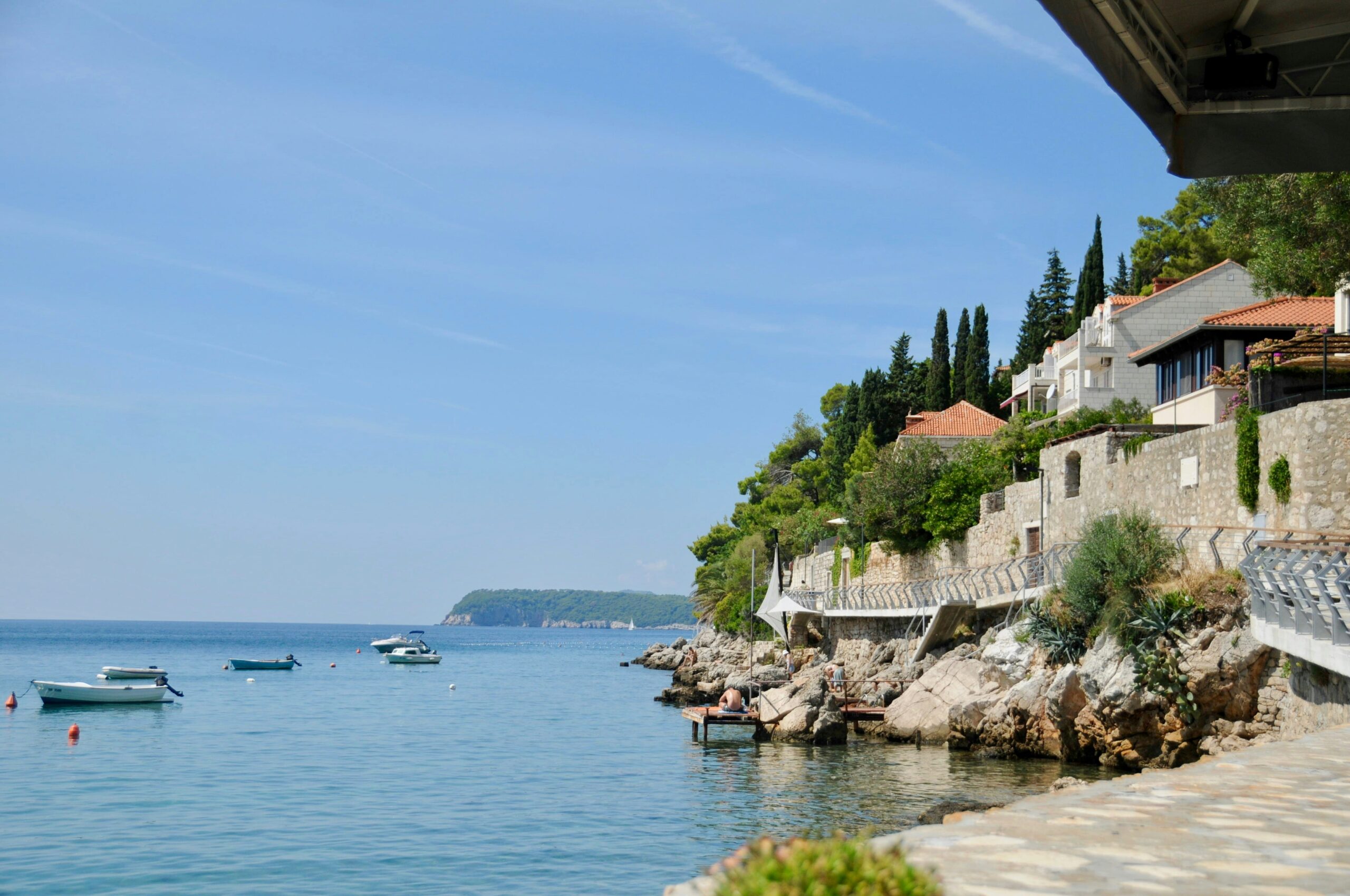
Coastal examples — From some coastal viewpoints you can see mountain ranges across bays or seas with remarkable clarity on calm, dry days or after rain clears the air. Refraction over the cooler sea surface can enhance visibility of remote coastal peaks.
Desert to mountain views — In very dry regions, such as deserts, the low humidity and low aerosol content can make distant mountain ranges look unusually sharp, especially when the air is stable and there is little dust stirred up by wind.
How color and contrast change
When scattering is reduced, two visual changes are most noticeable: increased contrast and truer colors. Contrast improves because less light is scattered into the line of sight from intermediate air, so shadows and highlights on the mountain remain intact. Colors can appear less blue-shifted; the mountain’s rocks and vegetation show more of their natural hues rather than appearing muted or blue-tinted by scattered skylight.
How your brain interprets distance and why clarity can seem deceptive
Human depth perception relies on multiple cues including atmospheric perspective (nearby objects cast stronger shadows and more contrast, while distant objects are bluer and hazier). When atmospheric perspective is reduced — for example, when haze is absent and contrast is unexpectedly high — your brain may underestimate distance. That makes distant mountains look closer than they actually are.
Additionally, familiar size cues can be missing for vast landscapes: without intermediate objects of known size, the brain has limited references and may rely disproportionately on sharpness and contrast to judge distance, which can be misleading under unusual atmospheric conditions.
Practical implications and applications
Photography — Photographers who shoot landscapes watch weather closely. Clear air after rain, cool mornings, stable atmospheres, and high-pressure systems often produce the best long-distance clarity. Understanding refraction and inversion can help predict when distant features will be sharp or when mirage effects might create dramatic distortion.
Aviation and navigation — Pilots and mariners are trained to be aware that refraction and mirages can change the apparent position of landmarks and coastlines. Instruments and charts account for geometry and electronic navigation rather than relying solely on visual sightings across long distances.
Weather reading — Observing unusually clear distant objects is a practical, informal clue about current atmospheric conditions: low particulate load, low humidity, and temperature stratification. Such conditions often accompany high-pressure systems and calm weather.
When the effect can be misleading or surprising
Because refraction can shift apparent positions, it sometimes creates optical illusions that can mislead casual observers. A mountain might appear higher, lower, or duplicated (stacked images) in a way that tricks the eye. These effects are usually benign but can be surprising when the brain applies normal depth cues to an atmosphere that is temporarily altering those cues.
Also, unusually clear views do not mean the mountain is closer in any practical sense. For activities that require distance accuracy — navigation, surveying, or range estimation — atmospheric optical effects should be treated as potential errors rather than reliable indicators of distance.
How to tell when clarity is due to atmospheric conditions
Look for signs of inversion or calm conditions: a very still morning, ground fog confined to valleys, a distinct layer of haze at one level but clear air above it, or a rapid improvement in visibility after rain. If distant features suddenly sharpen at dawn and fade as the day warms and turbulence increases, that pattern points to temperature-related layering rather than a permanent change in visibility.
Simple experiments to observe the effect
Compare views at different times of day — note how the same distant peak changes in clarity at dawn, midday, and evening.
Observe after precipitation — take photos before and after rain to see how lowered particulate matter improves long-distance contrast.
Note the angle of view — superior mirages are more likely when looking across a large body of water or a long plain where air near the surface is cooler than the air above. Look for unusual vertical stretching or multiple images of the same ridge as a sign of strong refraction.
Summary of the main mechanism
In short, distant mountains can look unusually clear when the atmosphere between you and the mountains scatters less light and refracts light in ways that preserve or enhance contrast. Temperature layering (including inversions), low humidity, low particulate concentration, and calm conditions are the usual causes. Refraction can also shift apparent positions, sometimes producing mirage effects that make distant features look brighter, sharper, or oddly placed.
Conclusion
The striking clarity of distant mountains is a reliable and explainable product of atmospheric physics. Reduced scattering and layered refraction — often linked to temperature inversions, low humidity, and clean air — let more direct light reach the observer and can bend light in ways that boost contrast and alter apparent position. Appreciating these effects enriches outdoor observation and helps photographers, navigators, and curious observers understand why landscapes sometimes look impossibly crisp from far away.